The Marginalia Museum

Est. 1994 · Coldharbour Lane · Free Admission

A museum for the notes strangers left in books.

Grocery lists in poetry collections. Arguments picked with dead authors. Messages meant for someone who never came back for them. We keep them all.

About the collection

Every secondhand book is two books.

The one the author wrote, and the one a stranger left behind in it. Since 1994 we have collected the second kind: 2,214 annotated volumes, catalogued by margin, flyleaf, and the backs of receipts used as bookmarks. Nothing here was written for an audience. That is exactly why we keep it.

2,214Volumes accessioned
31Marriage proposals*
1Confession, unsigned
“We do not collect books. We collect the moment a person forgot anyone else would ever read them.” — E. Vasseur, founding curator

Featured exhibits · Summer rotation

Three pages, three strangers.

and the kettle keeps its counsel,
and the stairs remember your weight,
and the coat on the door still holds
the shape of your shoulders, patient
as furniture, certain as rain.

What the house knows, it keeps.
What it keeps, it keeps warm.

· 47

Handwritten in the margin: milk, stamps, call Dora back, lemons — the good ones. Then, lower: ask him about the coat poem.

Acc. 2019.0847
Marginalia Mus.

Forgiveness, rightly understood, costs the forgiver nothing. It is merely the decision to set down a weight one was never obliged to carry. The grudge, not the injury, is the true burden; release it and the injury itself grows quiet, as all untended things do.

Those who claim they cannot forgive have simply not yet grown tired enough of carrying.

· 88

Handwritten in ink beside the passage: No. You have clearly never met my mother. And below, later: and yet I keep reading you, R. — 12 Nov, again.

Acc. 2002.0119
Marginalia Mus.

The Lighthouse Winters

a novel

CORMORANT & GRACE · PUBLISHERS

Handwritten on the flyleaf: For June. Read it now, then read it again when you're older — it will be a different book. — M.

Acc. 2011.0402
Marginalia Mus.

The examination bench

Look closer. Graphite has a grain.

Exhibit 2214 is our newest accession: a pressed flower and four pencilled words, found in a field guide. Under the conservator's lens you can see where the pencil faltered — the writer pressed hardest on the word after.

Drag the lens across the page

Of the meadow cranesbill, little need be said that the meadow does not say better. It flowers in the long grass of June, holds its colour through the first mowing, and is gone — wholly and without ceremony — by the middle of August. Gather it, if you must, in the early morning.

Pressed between pages, the petals keep their blue for some years, then surrender it slowly, the way all kept things do.

· 132

Handwritten beneath a pressed flower: he kept the flowers after all.

Acc. 2026.2214
Marginalia Mus.
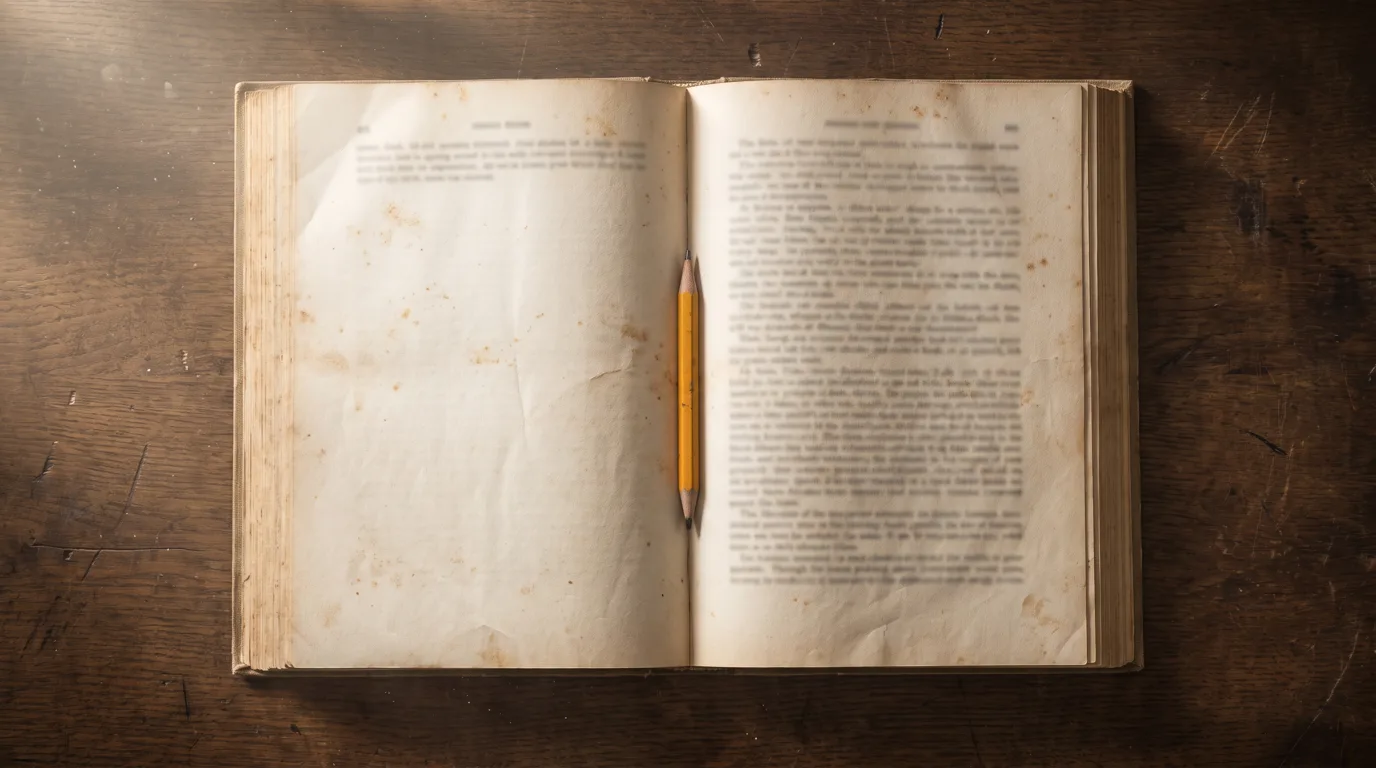
A worn secondhand book lying open on a dark wooden table, a pencil resting in the gutter, soft window light falling across the foxed pages.
the reading room, tuesday, 4 pm

Visit

The reading room is quiet, but not silent.

Every exhibit may be held. We lend gloves for the ink, but the pencil exhibits you may touch with clean hands — graphite is only pressure, and pressure is the whole point. Pages are turned for you by a volunteer on the hour.

Hours — Wed to Sun, 10.00–17.00
Address — 14 Coldharbour Lane, above the bindery
Admission — Free. The tip jar buys acid-free boxes.